Exploring the V Logo: Modern Symbolism for Brands
The Anatomy of a Powerful Mark
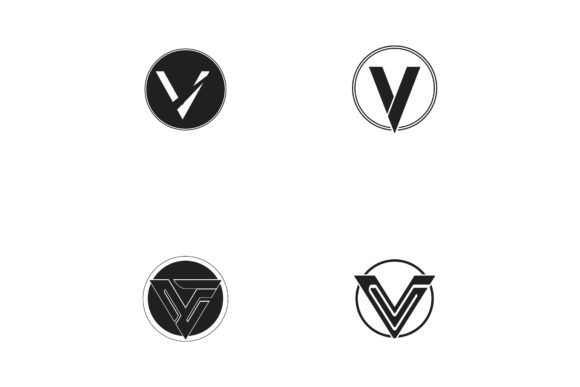
The "V Logo" concept is far more than just a letter; it is a geometric foundation for modern branding. Visually, the letter V is defined by strong diagonal lines meeting at a point, creating an inherent sense of direction and upward momentum. In design, this shape is often associated with victory, value, and vision. When we look at a V Logo, we are seeing a design element that balances stability with sharp, dynamic energy. It is a versatile character that can be rendered as a sharp, angular vector icon or softened into a fluid, elegant monogram. Whether you are working with a minimalist flat design or a complex 3D rendering, the core structure remains instantly recognizable.
The personality of a V Logo is inherently modern and professional. It carries a sense of precision that works exceptionally well for corporate business identities, particularly in sectors like finance, technology, and management. However, the adaptability of the shape allows it to transcend the corporate world. By manipulating the weight of the lines, adding serifs, or incorporating negative space, a V Logo can feel luxurious and elegant, perfect for high-end fashion boutiques or wedding invitations. It can also feel bold and energetic, suitable for sports branding or digital apps. The visual appeal lies in its clean geometry; it is a simple initial that carries significant weight without needing complex decoration.
Strategic Applications in Branding and Marketing
For designers and entrepreneurs, understanding where to deploy a V Logo is critical for effective brand identity. Because of its vertical orientation and symmetry, it serves as an excellent app icon or social media avatar. In the digital space, a clean V Logo ensures readability even at small sizes on a mobile screen or a browser tab. For print, this mark translates beautifully onto business cards, packaging labels, and embossed stationery. The shape is bold enough to stand alone as a favicon but detailed enough to anchor a full header when paired with a logotype.
The influence of a V Logo on brand perception is significant. It projects an image of innovation and leadership. For a startup or a tech company, a geometric V Logo suggests a forward-thinking approach and connectivity—think of the arrows in a network or the circuit lines of a computer chip. For a creative agency or a personal blog, a hand-drawn or brush-stroke V Logo can convey artistic flair and personal touch. When crafting your marketing materials, using a V Logo consistently helps build recognition. It acts as a visual anchor that ties your web design, email headers, and physical signage together, creating a cohesive narrative that audiences can trust.
Design Flexibility and Style Variations
One of the greatest strengths of the V Logo is its malleability across different styles. In the realm of minimalist design, the V often utilizes negative space or abstract shapes to create a clever visual trick. For example, a designer might use two overlapping triangles to form the V, suggesting partnership or connection. In vintage or retro branding, the V can be enclosed in a badge or a shield, giving it a classic, established feel that works well for breweries, clothing lines, or heritage brands.
Color theory also plays a massive role in how a V Logo is perceived. A golden or gradient V Logo instantly signals luxury, premium quality, and celebration—ideal for anniversary logos or high-end product packaging. Conversely, a green V Logo might be used for eco-friendly brands, nature blogs, or healthy lifestyle apps. A bold red or black V Logo commands attention and authority, often seen in automotive or leadership consulting. The typography surrounding the logo matters, too. Pairing a strong, geometric V Logo with a sleek sans-serif font creates a clean, technical look, while pairing it with a delicate script font softens the identity for beauty or wedding-related industries.
Practical Guidance for Selection and Usage
When selecting a V Logo or commissioning one, you must evaluate the technical execution. Look for vector files (AI, EPS, SVG) that allow you to scale the design infinitely without losing quality. This is essential for everything from tiny favicon usage to massive banner printing. Check if the logo comes in different variations: a primary full-color version, a monochrome version for stamps or engraving, and a reversed version for dark backgrounds.
Furthermore, consider the "voice" of the logo. Does the specific angle of the V match your brand's energy? A sharp, acute angle feels aggressive and fast (good for logistics or sports), while a wider, obtuse angle feels stable and welcoming (good for community centers or support services). If you are a content creator or a crafter, you might look for a V Logo that incorporates hand-drawn elements or watercolor textures to make the brand feel more personal and less corporate. Always test your chosen V Logo in mockups—place it on a website header, a mobile app screen, and a printed business card to see how it interacts with real-world environments. By focusing on these practical details, you ensure your V Logo not only looks good but also functions as a powerful tool for business success.